
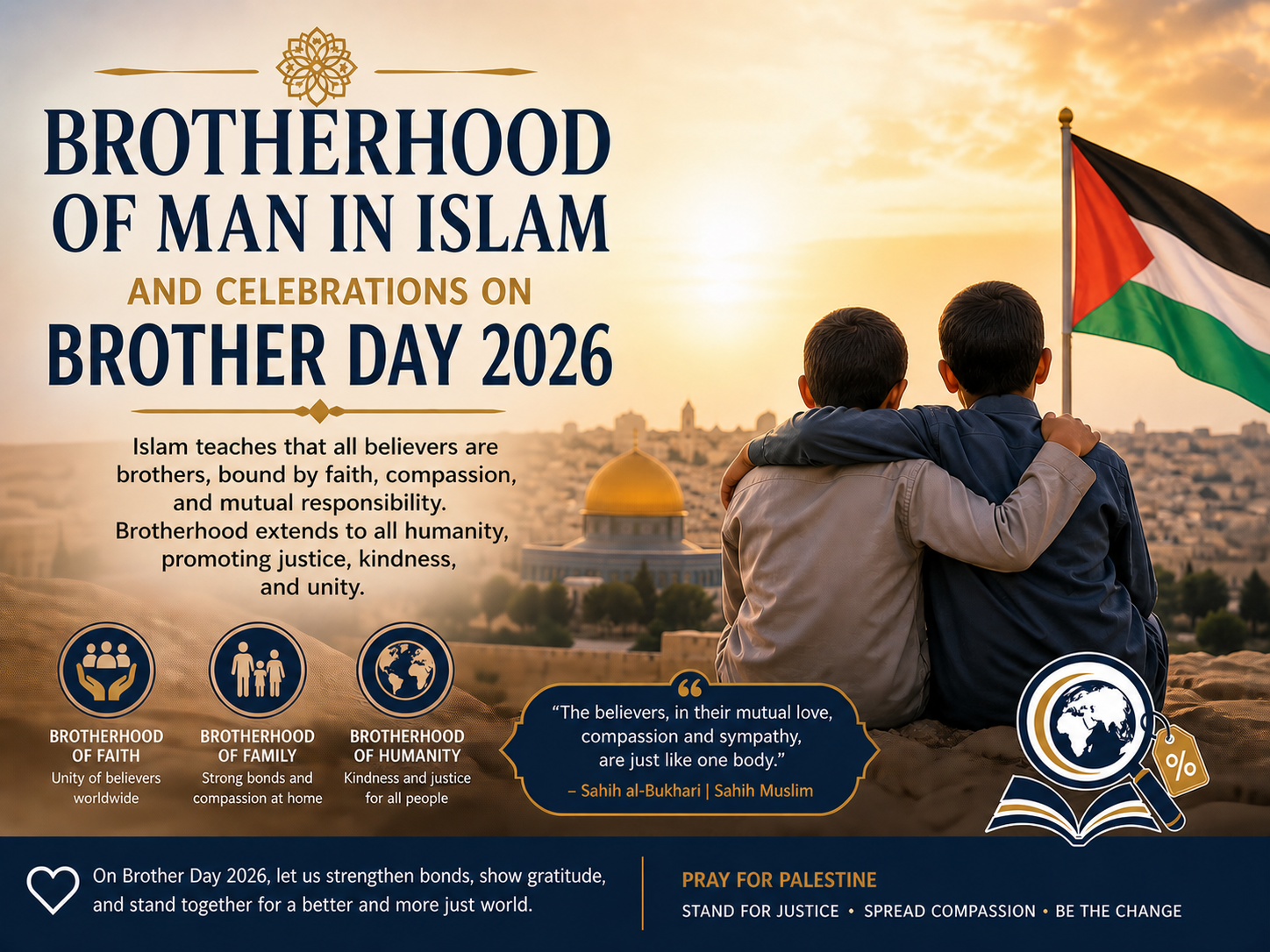
Brotherhood of Man in Islam and Celebrations on Brother Day 2026
The concept of brotherhood of man in Islam is a foundational principle that extends beyond family ties and nationality, embracing all believers and, at a broader level, all of humanity. It is built on unity, compassion, justice, and mutual responsibility. In contemporary discussions, even social observances like Brother Day 2026 can be used as reminders to reflect on these Islamic values and strengthen human bonds in a meaningful way.
Brotherhood in Islam: Core Understanding
In Islam, brotherhood is not symbolic—it is a practical system of ethics and behavior. The Qur’anic teachings emphasize that believers are part of one united community, bound by faith and mutual care. This unity is not limited to sentiment; it requires action such as supporting one another, resolving disputes, and maintaining justice.
The idea of brotherhood of man in Islam also extends to humanity at large, encouraging fairness, kindness, and dignity for all people regardless of background.
Guidance from Prophetic Teachings (Hadith)
Authentic narrations in Sahih al-Bukhari and Sahih Muslim repeatedly highlight the importance of Muslim unity and mutual responsibility:
- The Prophet Muhammad (peace be upon him) described believers as a single body—if one part suffers, the whole body responds with concern and pain. This illustrates emotional and social interconnectedness.
- He(peace be upon him) also emphasized that a Muslim should not harm another Muslim, abandon them in difficulty, or act unjustly toward them.
- Another narration highlights that Muslims are commanded to love for others what they love for themselves, establishing a foundation of empathy and shared wellbeing.
These teachings establish that brotherhood of man in Islam is not optional—it is a moral obligation.
Three Levels of Brotherhood in Islam
Islamic scholars explain brotherhood in three broad dimensions:
1. Brotherhood of Faith
This is the strongest bond, uniting Muslims worldwide regardless of ethnicity or geography. It is based on shared belief, worship, and values.
2. Brotherhood of Family
Islam places strong emphasis on maintaining family ties, kindness toward parents, and fulfilling responsibilities within the household.
3. Brotherhood of Humanity
At its widest level, Islam promotes compassion toward all people. Justice, mercy, and ethical treatment are required even with those outside the faith.
Together, these layers form a complete framework of the brotherhood of man.
Relevance of Brother Day 2026 in Modern Context
Although Brother Day 2026 is not an Islamic religious event, it can serve as a cultural reminder of the importance of appreciating brothers, strengthening relationships, and rebuilding emotional connections.
From an Islamic perspective, such occasions should be used to:
- Reflect on family ties and forgiveness
- Strengthen bonds between siblings
- Promote gratitude and emotional support within families
- Encourage reconciliation where relationships are strained
In this way, Brother Day 2026 can be aligned with Islamic values of unity and mercy.
Brotherhood of Man and the Palestinian Struggle
A crucial aspect of the brotherhood of man in Islam is standing with oppressed communities. The ongoing struggle of Palestinian brothers and sisters is often cited as a reminder of collective responsibility within the Ummah.
Islamic teachings encourage believers to:
- Feel empathy for suffering communities
- Offer practical support where possible
- Avoid indifference toward injustice
- Promote peace, relief, and humanitarian assistance
The situation in Palestine highlights the importance of unity beyond borders. It reinforces that the Muslim community is interconnected, and the pain of one group should be felt by all.
Strengthening Unity in the Ummah
To practically apply the concept of brotherhood in today’s world, Islam encourages several behaviors:
- Avoiding hatred, envy, and division
- Practicing forgiveness and patience
- Supporting others in hardship
- Maintaining honesty and trust in relationships
- Promoting reconciliation during conflicts
These principles are repeatedly emphasized in authentic traditions found in Sahih al-Bukhari and Sahih Muslim, forming a moral structure for societal harmony.
Modern Application of Brotherhood Values
In today’s digital and global environment, the brotherhood of man in Islam can be applied through:
- Supporting charitable causes
- Spreading awareness of humanitarian crises
- Strengthening family communication
- Encouraging positive social behavior online
- Building communities based on respect and empathy
Even symbolic events like Brother Day 2026 can be used as opportunities to reconnect with these values.
Conclusion
The brotherhood of man in Islam is a comprehensive ethical system that promotes unity, compassion, and justice at all levels of society. It is deeply rooted in the teachings of the Qur’an and reinforced through authentic narrations in Sahih al-Bukhari and Sahih Muslim.
Whether reflected in daily interactions, family relationships, or global concerns such as the Palestinian struggle, this principle remains central to Islamic life.
As Brother Day 2026 is observed in various cultural contexts, it can serve as a reminder to strengthen bonds, resolve conflicts, and renew commitment to unity. Ultimately, Islam teaches that true brotherhood is not defined by words, but by action, empathy, and responsibility toward one another as part of a single human family.