
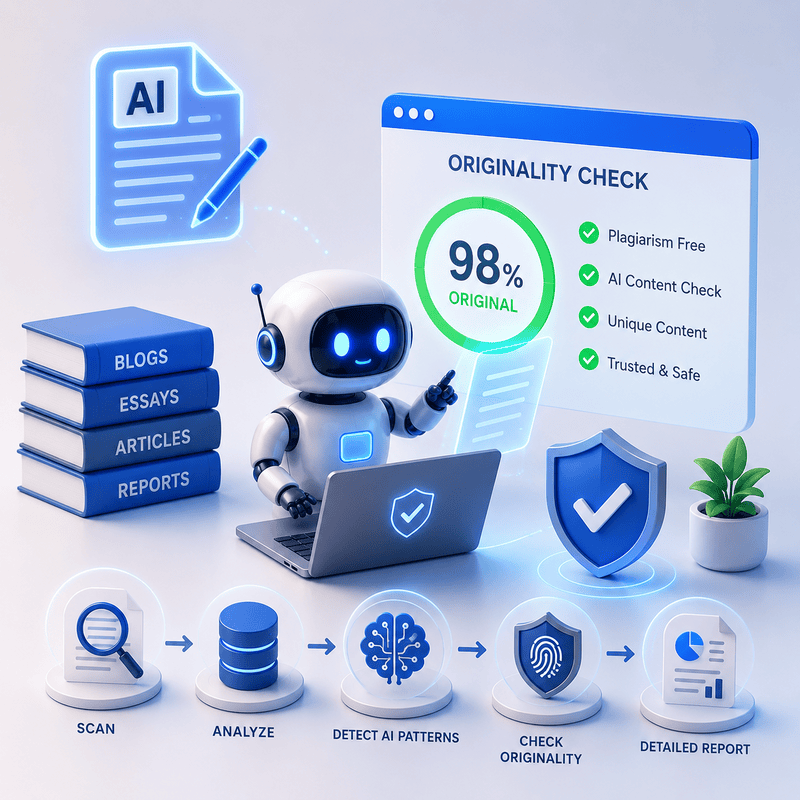
Artificial intelligence has transformed the way people create digital content. Bloggers, students, businesses, marketers, publishers, and freelancers now use AI-powered writing tools to generate articles, essays, product descriptions, emails, social media captions, and marketing campaigns within minutes. As AI-generated writing becomes more common across the internet, searches related to check ai plagiarism free continue growing rapidly.
The rise of AI-assisted writing created a new challenge for online publishing and academic integrity. Many users now want reliable ways to:
- verify originality
- detect copied content
- identify AI-generated writing
- maintain content authenticity
- protect intellectual property
- improve SEO quality
This increasing demand has encouraged the development of advanced plagiarism and AI detection systems capable of analysing language patterns, duplication, writing behaviour, and originality signals.
Today, content authenticity matters more than ever. Search engines, publishers, schools, businesses, and readers increasingly prioritize:
- trustworthy information
- original writing
- valuable insights
- authentic communication
- human-focused content
This guide explores the growing relationship between artificial intelligence and plagiarism detection, how originality systems work, why content authenticity matters, major challenges facing AI-generated writing, ethical concerns, SEO implications, and the future of digital verification in 2026.
Understanding the Rise of AI-Generated Content
Artificial intelligence has changed digital publishing dramatically over the past few years.
Modern AI writing systems can now generate:
- blog articles
- academic essays
- advertisements
- reports
- email campaigns
- scripts
- website content
- social media posts
within seconds.
This technological progress improved productivity but also raised serious concerns regarding:
- originality
- plagiarism
- misinformation
- low-quality publishing
- content authenticity
As AI-generated writing becomes increasingly realistic, many organizations now prioritize verification and transparency.
Why People Search for Check AI Plagiarism Free Tools
The growing popularity of AI-assisted writing created demand for smarter verification systems.
Content Authenticity Became More Important
Publishers and businesses want original content that provides genuine value.
Schools Focus on Academic Integrity
Educational institutions increasingly monitor originality in student assignments.
Search Engines Prioritize Helpful Content
Modern SEO algorithms reward:
- useful information
- authentic communication
- human-centered writing
- expertise
rather than mass-produced low-value content.
Businesses Want Brand Trust
Original communication strengthens credibility and long-term audience trust.
What Does Check AI Plagiarism Free Mean?
The term check ai plagiarism free generally refers to tools or processes that evaluate whether content:
- contains plagiarism
- appears AI-generated
- lacks originality
- duplicates existing sources
These systems often combine:
- plagiarism analysis
- AI writing detection
- originality verification
- language pattern analysis
to provide deeper content evaluation.
The Difference Between AI Detection and Plagiarism Detection
Many users mistakenly believe both systems work the same way, but they serve different purposes.
| Feature | AI Detection | Plagiarism Detection |
|---|---|---|
| Main Goal | Identify machine-generated writing | Detect copied text |
| Analysis Method | Language behavior patterns | Database comparison |
| Focus Area | Writing style | Content duplication |
| Accuracy Challenges | High | Moderate |
| Human Review Needed | Yes | Sometimes |
| Use Cases | AI verification | Copyright protection |
How Plagiarism Detection Systems Work
Traditional plagiarism systems compare submitted content against large databases.
Database Comparison
Detection systems scan:
- websites
- articles
- academic databases
- published documents
for matching content.
Similarity Analysis
The system identifies duplicated phrases and structural overlap.
Originality Reports
Users often receive percentage-based similarity scores.
Citation Recognition
Some tools attempt to recognize properly cited references.
How AI Detection Systems Work
AI detection tools analyze language behavior rather than copied content.
Predictability Analysis
AI-generated text often follows highly predictable patterns.
Sentence Structure Evaluation
Machine-generated content may display unusually consistent formatting.
Statistical Language Modeling
Detection systems evaluate probability patterns within writing.
Machine Learning Models
Most systems train on:
- human-written datasets
- AI-generated datasets
to improve recognition accuracy.
Why AI Content Raises Plagiarism Concerns
Artificial intelligence introduced new challenges regarding originality.
AI Models Learn From Existing Content
AI systems train using large collections of internet data.
Similar Phrasing May Appear Naturally
AI-generated writing sometimes resembles existing online material unintentionally.
Mass AI Publishing Reduced Content Quality
Some websites publish large volumes of low-value automated content.
Rewritten Content Can Still Lack Originality
Even paraphrased AI content may feel repetitive or generic.
The Relationship Between AI and Digital Authenticity
Authenticity has become a major priority in modern publishing.
Readers Prefer Human-Like Communication
Audiences often connect more strongly with:
- emotional storytelling
- personal experience
- authentic tone
- unique insights
Businesses Want Brand Personality
Generic automated writing may weaken brand identity.
Search Engines Reward User Value
Modern SEO increasingly prioritizes:
- helpfulness
- trustworthiness
- expertise
- originality
Why Bloggers Use AI Verification Tools
Bloggers and publishers frequently review content before publication.
SEO Performance Depends on Quality
High-quality content often performs better in search rankings.
Original Content Builds Authority
Unique insights strengthen audience trust and long-term traffic growth.
AI Assistance Still Requires Human Editing
Professional refinement improves:
- tone
- readability
- structure
- engagement
Benefits of Using Check AI Plagiarism Free Systems
Verification systems provide several important advantages.
Improved Content Transparency
Organizations better understand how content was produced.
Stronger Publishing Standards
Detection systems encourage responsible content creation practices.
Better Academic Integrity
Schools and universities maintain originality standards more effectively.
Faster Editorial Review
Automated systems reduce manual review workload.
Challenges Facing AI Verification Technology
Despite rapid improvements, detection systems still face limitations.
False Positives Remain Common
Human-written content may sometimes appear AI-generated.
AI Writing Is Becoming More Advanced
Modern language models increasingly mimic natural human behavior.
Different Platforms Produce Different Results
Detection accuracy varies between tools.
Short Content Samples Reduce Reliability
Limited text makes analysis more difficult.
Ethical Concerns Surrounding AI Detection
The growth of AI verification systems created important ethical discussions.
Risk of Incorrect Accusations
Students and writers may face unfair claims due to inaccurate results.
Privacy Concerns
Users sometimes worry about how uploaded content is stored or analyzed.
Overdependence on Automated Scores
Human judgment remains essential during content evaluation.
Transparency Matters
Detection systems should explain how scores and results are generated.
Why Human Creativity Still Matters
Despite rapid AI growth, human communication remains valuable.
Emotional Intelligence
Humans naturally understand:
- emotion
- storytelling
- empathy
- cultural nuance
better than machines.
Unique Perspectives
Human writers contribute:
- personal experience
- creativity
- opinion
- critical thinking
that AI cannot fully replicate.
Authentic Voice Strengthens Trust
Readers often prefer content that feels natural and personal.
Responsible Use of AI Writing Tools
Artificial intelligence itself is not necessarily harmful. Problems often depend on usage practices.
AI Works Best as a Productivity Assistant
Many professionals use AI for:
- brainstorming
- outlining
- organizing ideas
- improving efficiency
rather than complete automation.
Human Editing Improves Originality
Professional refinement adds:
- personality
- context
- authenticity
- emotional depth
Ethical Publishing Matters
Responsible content creation supports long-term trust and credibility.
How Search Engines View AI and Plagiarism
SEO continues evolving alongside artificial intelligence.
Quality Is More Important Than Automation
Search engines primarily focus on:
- usefulness
- user experience
- expertise
- originality
Spam Content Faces Greater Scrutiny
Low-value mass-generated content may struggle in rankings.
Human-Focused Content Performs Better
Authentic communication often improves audience engagement.
Industries Using AI Verification Systems
Detection platforms now support multiple industries.
Education
Schools monitor assignment originality.
Publishing
Editors review content authenticity before publication.
Marketing Agencies
Businesses verify content quality and uniqueness.
Freelance Platforms
Clients increasingly request original human-refined work.
Future of Check AI Plagiarism Free Technology
Verification systems will continue evolving alongside AI-generated writing.
Smarter Language Analysis
Future systems may better evaluate:
- writing style
- contextual flow
- structural behavior
- originality signals
Real-Time Detection Tools
Some platforms may eventually analyze writing during content creation itself.
Better Integration With Publishing Systems
Content management platforms may include built-in originality verification.
AI and Human Collaboration Will Increase
Future workflows will likely combine:
- AI productivity
- human creativity
- editorial oversight
more closely.
Tips for Maintaining Originality While Using AI
Writers can use AI responsibly without sacrificing authenticity.
Add Personal Experience
Unique insights improve originality significantly.
Rewrite Generic Sections
Human editing creates more engaging communication.
Verify Facts Carefully
AI-generated information may occasionally contain inaccuracies.
Maintain Brand Voice
Consistent tone strengthens authority and audience trust.
Why Authentic Content Will Always Matter
Technology continues evolving, but audiences still value genuine communication.
Readers Want Trustworthy Information
Authentic content improves long-term engagement.
Human Storytelling Creates Emotional Connection
Personal experiences remain powerful.
Quality Builds Sustainable Growth
Helpful and original content supports stronger digital visibility.
Best Practices for Content Creators in 2026
Modern content creators should focus on balance rather than automation alone.
Use AI Strategically
Artificial intelligence works best when supporting creativity rather than replacing it.
Prioritize User Value
Useful content matters more than mass publishing.
Maintain Editorial Oversight
Professional review improves quality and trustworthiness.
Focus on Long-Term Reputation
Authenticity strengthens brand credibility over time.
Final Thoughts
The rapid expansion of artificial intelligence has transformed online publishing, digital marketing, education, and business communication worldwide. As AI-powered writing tools become increasingly advanced, demand for systems that check ai plagiarism free continues growing across multiple industries.
Modern verification tools now play an important role in evaluating originality, identifying duplicated content, analyzing AI-generated writing patterns, and supporting ethical publishing practices. Although these systems still face challenges related to accuracy, privacy, and evolving language models, they remain valuable tools for maintaining digital trust and content quality.
At the same time, human creativity, emotional intelligence, storytelling ability, and professional editing continue defining truly meaningful content. Artificial intelligence can improve productivity and simplify workflows, but authentic communication still depends heavily on human insight and originality.
As technology evolves throughout 2026 and beyond, the future of digital publishing will likely depend on balancing AI-powered efficiency with ethical content creation, transparency, and genuine human creativity.

Small Business Ideas: Most Profitable Business Opportunities
Starting a business from a small business ideas, is no longer limited to large investments, office spaces, or huge teams….

AI Detector Free Tools in 2026: Best Platforms for Accurate
Now that artificial intelligence has transformed digital content creation across blogging, education, marketing, publishing, and business communication. AI-powered writing assistants…
AI Detector: How Modern Detection Tools Are Changing Digital Content
In today’s world, artificial intelligence has transformed the way people create online content. From blog articles and academic writing to…
Pixverse AI vs Hailuo AI: Which AI Video Generator Is
Artificial intelligence is rapidly transforming digital creativity, and AI-powered video generation has become one of the fastest-growing sectors in the…
Gemini AI Explained: Features, Use Cases, and the Future of
No more a simple tool Gemini AI is rapidly reshaping the modern digital world. From content creation and automation to…
12 Best ChatGPT Alternatives in 2026: Top AI Tools for
AI has completely transformed how people create content, research information, automate tasks, and communicate online. After the rise of ChatGPT,…
- People Over Papers: Why Skills and Relationships Matter More Than Degrees
- Is Fast People Search Safe? Privacy Risks You Should Know
- Glow Up Guide: 15 Real Ways to Improve Your Looks and Lifestyle
- AliExpress Affiliate: How Does the Program Work and Is It Worth Joining
- Case Management System: How Does It Improve Modern Business Operations?