
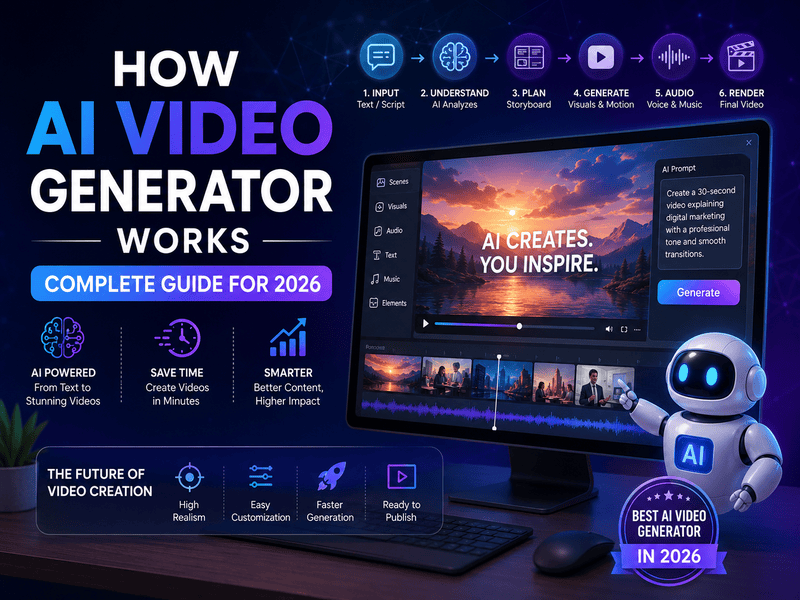
Artificial intelligence is transforming content creation, and one of the most exciting innovations is the AI video generator. Whether you are a marketer, educator, or content creator, understanding how an AI video generator from text works can help you create high-quality videos quickly and efficiently.
In this guide, I’ll walk you through how these tools function, the technology behind them, and what makes them best to stand out in 2026.
What is an AI Video Generator?
An AI video generator is a type of generative artificial intelligence that creates videos automatically using text prompts, images, or other inputs. Instead of manually filming, editing, and producing content, you simply describe what you want—and the AI does the rest.
For example, you can type:
“Create a 30-second video explaining digital marketing with a professional tone and smooth transitions.”
The AI will generate visuals, animations, voiceovers, and even background music based on that prompt.
How AI Video Generator Works
To understand how an it actually works, we need to break it into simple steps.
1. Input: Text, Image, or Script
Everything starts with an input. This could be:
- A text prompt (most common)
- A full script
- An image (for animation or video expansion)
This is why tools are often called AI video generator from text—because text is the primary driver of video creation.
2. Natural Language Understanding
Once you enter your prompt, the AI analyzes it using advanced language models.
These models:
- Understand context
- Identify key elements (scene, tone, subject)
- Break down instructions into structured data
For example:
- “A calm ocean at sunset” → Scene + lighting + mood
- “Professional business presentation” → Style + tone + pacing
3. Scene Planning and Storyboarding
After understanding your input, the AI creates a virtual storyboard.
This includes:
- Scene sequences
- Camera angles
- Visual transitions
- Timing and duration
Think of this step as the AI acting like a film director, planning how the video should flow.
4. Visual Generation by AI Video Generators
This is where generative AI models come into play.
AI systems use:
- Deep learning models
- Neural networks trained on millions of videos and images
They generate:
- Backgrounds
- Characters or avatars
- Animations
- Visual effects
Some advanced tools (including Meta AI video generator systems) can even maintain character consistency across scenes.
5. Motion and Animation
Static visuals are then turned into moving scenes.
AI determines:
- Object movement
- Camera motion (zoom, pan, tilt)
- Scene transitions
This step makes the video feel dynamic and realistic.
6. Voice and Audio Generation
Most modern AI video generators include audio features such as:
- AI voiceovers
- Background music
- Sound effects
Voice models are trained on thousands of hours of speech, allowing them to:
- Mimic human tone
- Adjust accents and emotions
- Sync with visuals automatically
7. Final Rendering
Once all components are ready, the AI combines them into a complete video.
This includes:
- Video frames
- Audio tracks
- Transitions
- Effects
The output is a ready-to-use video that can be downloaded or edited further.
Technology Behind AI Video Generators
AI video generation is powered by several advanced technologies.
Machine Learning and Deep Learning
These systems learn from massive datasets:
- Videos
- Images
- Audio recordings
They identify patterns and use them to generate new content.
Neural Networks
Neural networks simulate how the human brain processes information.
They help AI:
- Recognize objects
- Understand scenes
- Generate realistic visuals
Generative Models
The core of any AI video generator lies in generative models.
These models:
- Create new content from learned data
- Predict what a “realistic” video should look like
Transformers and Language Models of AI Video Generators
For text-based video generation, AI uses transformer models.
These allow:
- Understanding long text prompts
- Maintaining context
- Producing accurate results
Types of AI Video Generators
1. Text-to-AI Video
These tools convert written prompts into videos.
Best for:
- Marketing content
- Educational videos
- Social media clips
2. Image-to-Video Generators
These animate static images.
Use cases:
- Product showcases
- Character animation
- Before/after transformations
3. Script-to-Video Tools
You provide a full script, and the AI:
- Breaks it into scenes
- Adds voiceover
- Generates visuals
Features of the Best AI Video Generator 2026
As we move into 2026, the best AI video generator tools offer:
High Realism
- More lifelike visuals
- Smooth animations
- Natural voiceovers
Customization
- Style control
- Camera direction
- Scene editing
Multi-Modal Input of AI Video Generator
- Text + image + audio support
Faster Generation
- Videos created in minutes instead of hours
Built-in Editing Tools
- Trim clips
- Add effects
- Adjust timing
Role of Meta AI Video Generator
The Meta AI video generator ecosystem is pushing innovation further by:
- Improving real-time video generation
- Enhancing avatar realism
- Integrating AI into social platforms
- Supporting immersive and interactive video content
These advancements are making AI video tools more accessible and powerful for everyday users.
Benefits of AI Video Generators
1. Saves Time
No need for filming, editing, or production teams.
2. Cost-Effective
Many of online apps offer free services. Reduces the need for expensive equipment and software.
3. Easy to Use
Anyone can create videos with simple prompts.
4. Scalable Content Creation by AI Video Generator
Perfect for businesses producing large amounts of content.
Challenges and Limitations of AI Video Generators
Despite the benefits, there are some limitations:
AI Hallucinations
Sometimes visuals may not match the prompt perfectly.
Limited Creativity Control
Fine-tuning complex scenes can be difficult.
Data Dependency
Quality depends on training data.
Ethical Concerns
Includes copyright and misuse risks.
Future of AI Video Generation
AI video generation is evolving rapidly. In the near future, we can expect:
- Real-time video creation
- Fully interactive videos
- Personalized content at scale
- Hyper-realistic digital humans
The gap between human-created and AI-generated content is becoming smaller every year.
Conclusion
Understanding how an AI video generator works helps you unlock its full potential. From analyzing text prompts to generating complete videos with visuals and audio, these tools are reshaping digital content creation.
Whether you’re exploring and testing an AI video generator from text, or searching for the best AI video generator in 2026, one thing is clear: AI is making video production faster, smarter, and more accessible than ever before.
If you want, I can also recommend the best AI video tools you can start using right now based on your needs.

Small Business Ideas: Most Profitable Business Opportunities
Starting a business from a small business ideas, is no longer limited to large investments, office spaces, or huge teams….


AI Detector Free Tools in 2026: Best Platforms for Accurate
Now that artificial intelligence has transformed digital content creation across blogging, education, marketing, publishing, and business communication. AI-powered writing assistants…
AI Detector: How Modern Detection Tools Are Changing Digital Content
In today’s world, artificial intelligence has transformed the way people create online content. From blog articles and academic writing to…
Pixverse AI vs Hailuo AI: Which AI Video Generator Is
Artificial intelligence is rapidly transforming digital creativity, and AI-powered video generation has become one of the fastest-growing sectors in the…
Gemini AI Explained: Features, Use Cases, and the Future of
No more a simple tool Gemini AI is rapidly reshaping the modern digital world. From content creation and automation to…
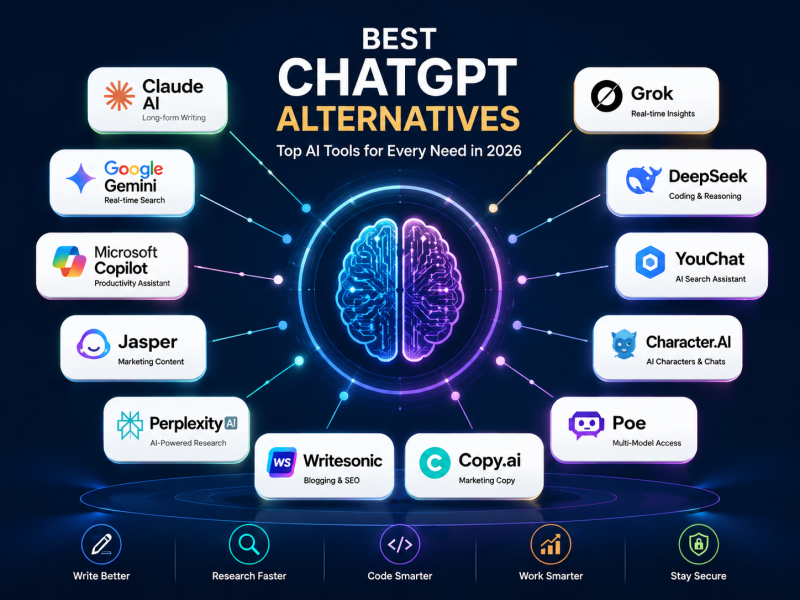
12 Best ChatGPT Alternatives in 2026: Top AI Tools for
AI has completely transformed how people create content, research information, automate tasks, and communicate online. After the rise of ChatGPT,…
- People Over Papers: Why Skills and Relationships Matter More Than Degrees
- Is Fast People Search Safe? Privacy Risks You Should Know
- Glow Up Guide: 15 Real Ways to Improve Your Looks and Lifestyle
- AliExpress Affiliate: How Does the Program Work and Is It Worth Joining
- Case Management System: How Does It Improve Modern Business Operations?