
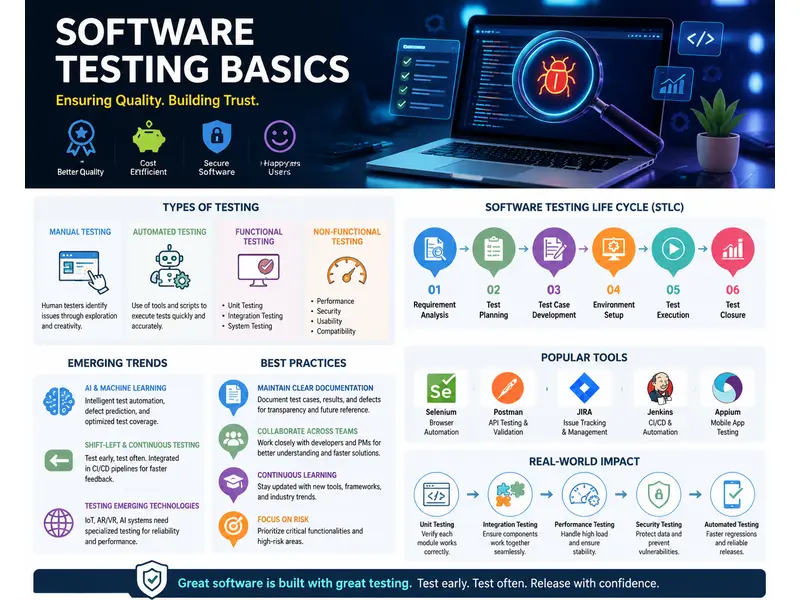
In the rapidly evolving world of software development, software testing basics play a crucial role in ensuring applications are reliable, secure, and user-friendly. While writing code brings ideas to life, testing transforms these ideas into functional and high-quality products. Without proper testing, even the most innovative software can face critical failures, security vulnerabilities, or poor user experiences.
Software testing is not merely a step in development—it is an ongoing process that ensures quality at every stage. From small startups to large tech corporations, understanding software testing basics is essential for developers, QA engineers, and product managers alike.
Why Software Testing is Essential
Every software project involves a level of risk. Bugs, glitches, and inconsistencies can impact user satisfaction, brand reputation, and operational efficiency. Implementing robust testing practices mitigates these risks.
Key benefits include:
- Enhanced Product Quality: Thorough testing ensures the software functions as intended.
- Cost Efficiency: Early detection of defects reduces the time and expense of fixing them post-launch.
- Improved Security: Testing identifies vulnerabilities that could be exploited by malicious actors.
- Better User Experience: Ensures smooth, intuitive, and error-free interactions.
Even with modern development tools, skipping or underestimating testing can result in lost customers, increased downtime, and regulatory issues.
Types of Software Testing Basics
Understanding the different types of testing is vital for building comprehensive testing strategies. Each type addresses specific aspects of software performance and quality.
Manual Testing
Manual testing is performed by human testers who interact with the software to identify bugs, usability issues, and inconsistencies. It is particularly effective for exploratory testing, where human judgment and creativity uncover issues automated tools might miss.
Advantages of manual testing:
- Flexibility to adapt to changing requirements.
- Human insight into user experience.
- Useful for short-term or one-off projects.
However, manual testing can be time-consuming and prone to human error, which is why it is often complemented by automated testing in larger projects.
Automated Testing
Automated testing uses scripts and software tools to run test cases. This method excels in repetitive tasks and large-scale applications where efficiency and accuracy are paramount.
Benefits of automated testing include:
- Faster execution of repetitive tests.
- Reduced risk of human error.
- Integration with continuous development pipelines.
Popular automated testing tools include Selenium, JUnit, and TestComplete, each suited for different testing scenarios.
Functional Testing
Functional testing focuses on verifying that the software behaves according to its requirements. This type ensures that each feature works correctly and interacts properly with other components.
Common functional testing types:
- Unit Testing: Validates individual components or modules.
- Integration Testing: Ensures combined components function together.
- System Testing: Assesses the complete system’s functionality.
Functional testing forms the foundation of software testing basics, guaranteeing that users receive a reliable product.
Non-Functional Testing
Non-functional testing evaluates aspects of software that are not directly related to specific behaviors but are critical for performance, usability, and security.
Key non-functional testing methods:
- Performance Testing: Measures responsiveness, scalability, and stability under load.
- Security Testing: Detects vulnerabilities and potential threats.
- Usability Testing: Evaluates user-friendliness and accessibility.
- Compatibility Testing: Ensures software works across devices, browsers, and operating systems.
Non-functional testing is increasingly important as applications are deployed across diverse environments and platforms.
The Software Testing Life Cycle (STLC)
The Software Testing Life Cycle (STLC) provides a structured framework for executing testing activities systematically. Following STLC ensures all critical aspects of quality assurance are addressed.
Key Phases of STLC
- Requirement Analysis: Understanding functional and non-functional requirements to identify testing needs.
- Test Planning: Defining the scope, objectives, resources, and timelines for testing.
- Test Case Development: Designing detailed scenarios that cover expected software behavior.
- Environment Setup: Preparing hardware, software, and network conditions for testing.
- Test Execution: Running test cases, documenting results, and logging defects.
- Test Closure: Analyzing outcomes, generating reports, and finalizing documentation.
Adhering to the STLC framework minimizes missed defects, ensures resource efficiency, and improves coordination across development and testing teams.
Emerging Trends in Software Testing Basics
The field of software testing evolves rapidly, influenced by new technologies, methodologies, and user expectations. Staying updated on trends is essential for delivering cutting-edge applications.
Artificial Intelligence and Machine Learning in Testing
AI and machine learning are revolutionizing software testing by:
- Automating complex test scenarios.
- Predicting areas with high defect probability.
- Optimizing test coverage.
AI-driven testing tools like Testim and Functionize analyze historical data to enhance accuracy and reduce manual effort.
Shift-Left Testing and Continuous Testing
Shift-left testing involves moving testing activities earlier in the development process. This proactive approach detects defects early, saving time and cost. Continuous testing, often integrated into DevOps pipelines, ensures every code change is validated immediately, reducing deployment risks and improving software reliability.
Testing for Emerging Technologies
Modern applications extend beyond traditional desktop and mobile platforms. IoT devices, smart home technology, AR/VR applications, and AI systems require specialized testing approaches:
- IoT Testing: Ensures interconnected devices communicate securely and reliably.
- AR/VR Testing: Evaluates immersive experiences and interaction accuracy.
- AI System Testing: Checks algorithm performance, bias, and decision accuracy.
By understanding and applying these trends, developers can keep their software competitive and robust.
Best Practices for Mastering Software Testing Basics
To ensure high-quality outcomes, testers should follow best practices that combine technical proficiency with strategic thinking.
Maintain Clear Documentation
Documenting test cases, scenarios, and results is essential for transparency, reproducibility, and future reference. This practice helps teams track progress, analyze defects, and maintain consistency.
Collaborate Across Teams
Testing is most effective when developers, testers, and product managers work closely. Clear communication ensures shared understanding of requirements, reducing misunderstandings and accelerating problem-solving.
Continuous Learning
The software industry evolves rapidly, and so do testing tools and methodologies. Staying updated with new frameworks, automation strategies, and emerging technologies enhances a tester’s efficiency and relevance.
Recommended Tools for Effective Testing
- Selenium: Browser automation for functional testing.
- Postman: API testing and validation.
- JIRA: Issue tracking and test management.
- Jenkins: Continuous integration and automated testing pipelines.
- Appium: Mobile application testing across platforms.
Real-World Example: Applying Software Testing Basics
Consider a fintech startup developing a mobile payment application. By applying software testing basics, the team can:
- Conduct unit testing for each module to ensure accurate transactions.
- Perform integration testing to verify that the payment system works seamlessly with banks and wallets.
- Run performance tests to handle thousands of simultaneous users during peak hours.
- Conduct security testing to protect sensitive financial data from breaches.
- Use automation to streamline regression testing after each update.
This structured approach prevents costly errors, enhances trust, and delivers a smooth user experience.
Challenges in Implementing Software Testing Basics
Even with strong frameworks, testing can face obstacles:
- Limited Resources: Small teams may struggle to cover all test scenarios.
- Rapid Development Cycles: Continuous deployment demands faster testing strategies.
- Complex Applications: Multi-platform, multi-device software requires extensive planning.
Addressing these challenges requires strategic prioritization, automation, and effective team coordination.
Conclusion: The Future of Software Testing
Mastering software testing basics is essential for delivering reliable, secure, and high-performing applications. As technology advances, testing will continue to evolve, integrating AI, continuous integration, and emerging platforms.
By following structured testing life cycles, leveraging automation, and staying updated with trends, developers can ensure their software meets user expectations and industry standards. Ultimately, software testing is not just a process—it’s a commitment to quality, innovation, and excellence.

2-Watt Laser Satellite Communication Is Changing the Future of Space
Space communication has evolved rapidly over the last few decades. Traditional radio frequency systems once dominated satellite communication, but modern…


TechInsiderz.com Gadgets: Expert Reviews and Comparisons
In the fast-paced world of consumer technology, staying updated with the latest gadgets can be overwhelming. TechInsiderz.com gadgets provide a…

EuroGamersOnline.com Gadgets: Review for Tech Enthusiasts
In the modern world of consumer technology, staying updated with the latest gadgets is essential for both enthusiasts and everyday…
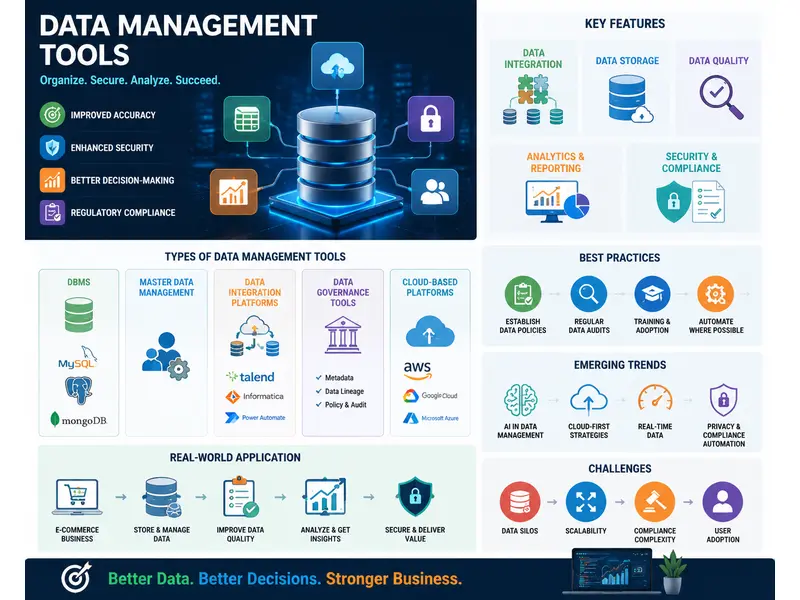
Data Management Tools: Optimizing Information in the Digital Era
In today’s digital-first world, data is one of the most valuable assets a business can possess. Organizations generate massive volumes…
Software Testing Basics: A Comprehensive Guide for Modern Developers
In the rapidly evolving world of software development, software testing basics play a crucial role in ensuring applications are reliable,…
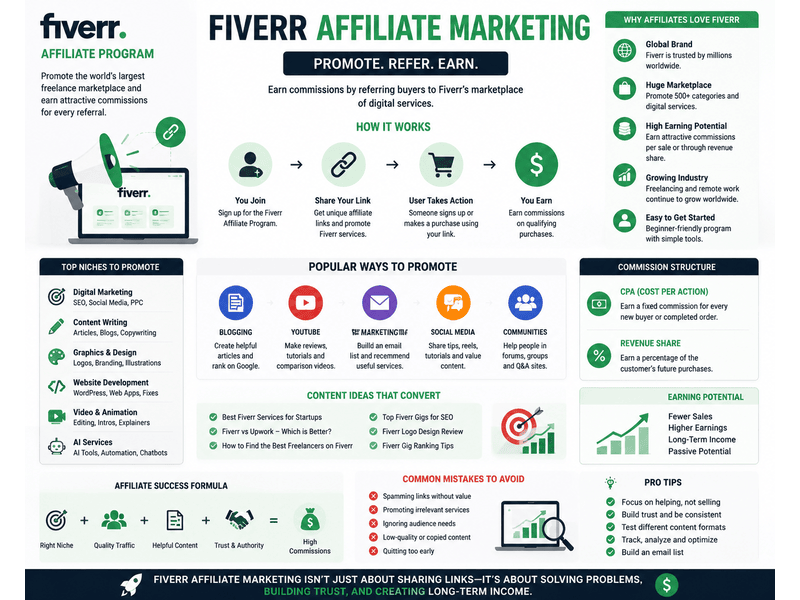
Fiverr Affiliate Program: A Guide to Maximizing Affiliate Earnings
Affiliate marketing continues to grow as one of the most popular online income opportunities in the digital economy. Thousands of…
No responses yet