
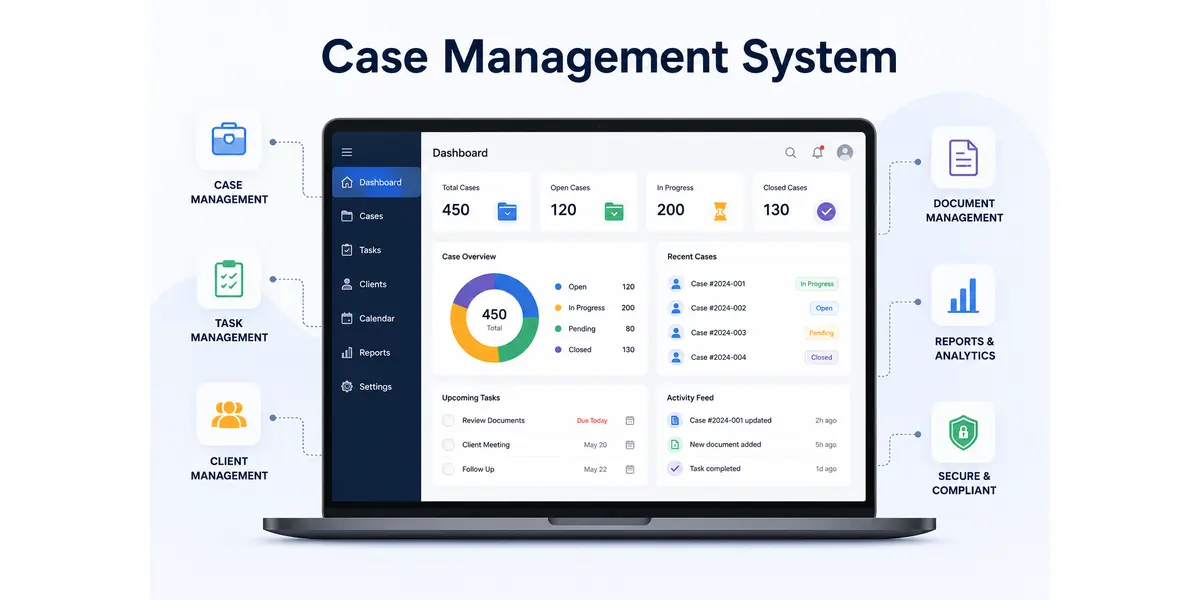
A case management system is a digital platform designed to organize, track, manage, and automate workflows related to cases, tasks, customer interactions, legal matters, healthcare records, support tickets, or operational processes. In 2026, organizations across industries are increasingly adopting case management systems to improve efficiency, reduce manual work, strengthen collaboration, and make faster decisions using centralized data.
Businesses, government agencies, healthcare institutions, legal firms, financial companies, and customer support teams now rely on these systems to manage complex operations in a structured and scalable way. As digital transformation accelerates globally, the demand for intelligent workflow platforms continues to grow in both developed and emerging markets, including Pakistan and the United States.
For professionals exploring modern enterprise technologies, understanding how a case management system works is becoming increasingly important because these platforms are now deeply connected with automation, artificial intelligence, cloud computing, cybersecurity, and enterprise productivity tools.
Why a Case Management System Matters in 2026
Modern organizations deal with large amounts of information every day. Managing documents, customer requests, legal records, compliance procedures, support tickets, and operational tasks manually is no longer practical for growing businesses.
A case management system helps organizations centralize information and automate repetitive workflows. Instead of relying on spreadsheets, emails, paper records, or disconnected software, teams can work through a unified platform.
This improves:
- Workflow visibility
- Team collaboration
- Task tracking
- Customer response times
- Compliance management
- Operational efficiency
- Reporting and analytics
In highly regulated industries such as healthcare, banking, insurance, and legal services, these systems also help organizations maintain proper documentation and audit trails.
What Is a Case Management System?
A case management system is software that helps organizations manage individual “cases” from start to finish.
A case could represent:
- A customer complaint
- A legal dispute
- A healthcare patient file
- An insurance claim
- An HR investigation
- A technical support request
- A government service request
The system stores all related information in one place, allowing teams to monitor progress, assign responsibilities, track deadlines, and maintain communication records.
How a Case Management System Works
Most modern systems follow a structured workflow:
- A case is created
- Information and documents are attached
- Tasks are assigned to team members
- Progress is monitored
- Notifications and updates are automated
- The case is resolved and archived
Advanced platforms may also use artificial intelligence to prioritize cases, recommend actions, detect risks, or automate repetitive processes.
Industries Using Case Management Systems
The use of case management platforms has expanded rapidly across industries.
Legal Industry
Law firms use case management software to organize legal documents, track court deadlines, manage client communications, and automate administrative tasks.
Legal professionals benefit from centralized access to contracts, evidence, case notes, and schedules.
Healthcare Sector
Hospitals and healthcare providers use case management systems to manage patient records, treatment plans, billing processes, and compliance documentation.
Healthcare case management has become especially important as digital health systems continue expanding worldwide.
Customer Service and Support
Customer support teams use these platforms to manage service tickets, complaints, technical issues, and customer communication.
This helps businesses improve response times and maintain service quality.
Government and Public Services
Government agencies often rely on case management systems to handle applications, citizen requests, legal documentation, and administrative procedures.
Digital transformation initiatives in many countries are pushing public institutions toward automated workflow technologies.
Financial Services and Insurance
Banks and insurance companies use case management tools for claims processing, fraud investigations, compliance monitoring, and customer onboarding.
Automation helps reduce delays while improving accuracy and regulatory compliance.
Key Features of a Modern Case Management System
Modern enterprise systems offer far more than simple task management.
Workflow Automation
Automation allows repetitive tasks to be completed without constant manual involvement.
For example:
- Automatic notifications
- Deadline reminders
- Case routing
- Document approvals
- Escalation triggers
This improves efficiency while reducing human error.
Centralized Document Management
A case management system stores all related files and records in one location.
Teams can quickly access:
- Contracts
- Emails
- Reports
- Client communication
- Images
- Compliance records
This reduces confusion caused by scattered documentation.
Collaboration Tools
Modern systems allow departments to collaborate in real time.
Features may include:
- Internal messaging
- Shared notes
- Task assignments
- Team dashboards
- Activity tracking
Collaboration tools are especially valuable for remote and hybrid work environments.
Analytics and Reporting
Data analytics capabilities help organizations monitor performance.
Managers can track:
- Resolution times
- Employee productivity
- Customer satisfaction
- Operational bottlenecks
- Compliance trends
Advanced reporting helps businesses make data-driven decisions.
Artificial Intelligence Integration
AI-powered case management systems are becoming increasingly common.
Artificial intelligence can assist with:
- Predictive analysis
- Smart case prioritization
- Fraud detection
- Automated recommendations
- Natural language processing
- Intelligent search functionality
These technologies help organizations process information more efficiently.
Benefits of Implementing a Case Management System
Organizations adopt these platforms because they improve both operational performance and customer experience.
Improved Efficiency
Automation eliminates repetitive administrative work.
Employees spend less time managing paperwork and more time solving actual problems.
Faster Response Times
Centralized workflows help teams resolve issues more quickly.
This is particularly important in industries like customer support, healthcare, and legal services.
Better Data Security
Modern systems often include advanced security features such as:
- Role-based access control
- Encryption
- Audit logs
- Multi-factor authentication
As cybersecurity threats continue increasing globally, secure information management has become essential.
Enhanced Compliance Management
Regulated industries must maintain accurate records and documentation.
A case management system helps organizations comply with legal, financial, and healthcare regulations by maintaining organized digital records.
Scalability for Growing Businesses
As businesses expand, managing operations manually becomes increasingly difficult.
Cloud-based systems allow organizations to scale workflows without dramatically increasing administrative complexity.
Cloud-Based Case Management System Solutions
Cloud technology has transformed enterprise software deployment.
Many businesses now prefer cloud-based systems because they offer:
- Remote accessibility
- Lower infrastructure costs
- Easier software updates
- Better scalability
- Faster deployment
Cloud-based platforms are especially beneficial for organizations with distributed teams or international operations.
Why Cloud Adoption Is Increasing
Businesses in Pakistan, the US, and other global markets are increasingly moving toward cloud infrastructure because it reduces dependence on physical servers and improves flexibility.
Cloud adoption also supports remote work trends and digital transformation initiatives.
Challenges of Using a Case Management System
Although these systems offer many advantages, implementation can still present challenges.
Employee Training and Adaptation
Workers may initially resist changing traditional workflows.
Organizations often need proper onboarding and training programs to ensure successful adoption.
Integration Complexity
Some businesses already use multiple software systems.
Integrating a case management platform with CRM tools, accounting software, HR systems, or enterprise databases can sometimes be technically challenging.
Data Migration Risks
Migrating old records into a new system requires careful planning.
Poor migration processes may result in missing files, duplicate data, or operational disruptions.
Cybersecurity Concerns
As organizations store sensitive information digitally, cybersecurity becomes a major priority.
Businesses must ensure systems are protected against data breaches, ransomware, and unauthorized access.
How Artificial Intelligence Is Changing Case Management Systems
AI is rapidly reshaping enterprise workflow technologies.
Intelligent Automation
AI systems can automate repetitive decisions and administrative actions.
For example:
- Categorizing cases automatically
- Predicting case urgency
- Assigning workloads intelligently
- Recommending next actions
This reduces manual effort while improving consistency.
Predictive Analytics
Machine learning algorithms analyze historical data to predict outcomes and operational trends.
Businesses can use predictive insights to improve resource allocation and reduce delays.
Conversational AI and Chatbots
Many organizations now integrate chatbots into customer service case management systems.
AI assistants can:
- Answer common questions
- Create support tickets
- Route requests automatically
- Provide status updates
This improves customer experience while reducing support workload.
Case Management System Trends in 2026
Several major trends are shaping the future of workflow management technologies.
Low-Code and No-Code Platforms
Businesses increasingly prefer systems that allow non-technical users to customize workflows without advanced coding skills.
This makes digital transformation more accessible to smaller organizations.
Mobile Accessibility
Employees now expect mobile-friendly systems that support remote access and real-time updates.
Mobile-first design is becoming a standard requirement.
AI-Driven Decision Support
Organizations are increasingly using AI to assist decision-making processes rather than relying solely on manual evaluations.
Enhanced Cybersecurity Measures
With growing cyber threats worldwide, vendors are investing heavily in advanced security features and compliance protections.
Choosing the Right Case Management System
Selecting the right platform depends on organizational needs, industry requirements, and scalability goals.
Factors Businesses Should Consider
Important evaluation factors include:
- Ease of use
- Security features
- Integration capabilities
- Cloud support
- Automation tools
- Reporting functionality
- Mobile compatibility
- Compliance support
- Pricing structure
Organizations should also consider long-term scalability before making investment decisions.
Why Case Management Systems Will Continue Growing
Digital transformation is changing how organizations operate globally.
Businesses increasingly require systems capable of managing:
- Large data volumes
- Distributed teams
- Customer expectations
- Regulatory compliance
- Automation workflows
A case management system provides the infrastructure needed to support these modern operational demands.
As artificial intelligence, cloud computing, and automation technologies continue advancing, these systems will likely become even more intelligent and deeply integrated into enterprise operations.
FAQs About Case Management System
What is a case management system used for?
A case management system is used to organize, track, and manage workflows related to customer requests, legal matters, healthcare records, support tickets, compliance tasks, and operational processes.
Which industries use case management systems?
Industries including healthcare, legal services, banking, insurance, customer support, government agencies, and HR departments commonly use these systems.
Is a cloud-based case management system better?
Cloud-based systems often provide better scalability, remote accessibility, easier maintenance, and lower infrastructure costs compared to traditional on-premise solutions.
Can artificial intelligence improve a case management system?
Yes. AI can automate workflows, prioritize cases, improve analytics, detect risks, and enhance operational efficiency.
Are case management systems secure?
Modern systems typically include encryption, access controls, audit logs, and cybersecurity protections, although organizations must still follow proper security practices.
What are the biggest benefits of a case management system?
Key benefits include improved efficiency, centralized information management, faster response times, automation, better collaboration, and enhanced compliance tracking.
Is a case management system suitable for small businesses?
Yes. Many modern platforms are scalable and designed for both small businesses and large enterprises.
How difficult is it to implement a case management system?
Implementation complexity depends on organizational size, existing infrastructure, integration requirements, and employee training needs.rove, smartphone users may gain access to more reliable global connectivity than ever before. What began as an emergency tool could become one of the most important communication advancements of the modern mobile era.
Case Management System: How Does It Improve Modern Business Operations?
A case management system is a digital platform designed to organize, track, manage, and automate workflows related to cases, tasks,…


iPhone Satellite Messaging: Redefining Emergency Communication
Smartphones have become an essential part of daily life, but traditional mobile networks still have one major weakness. In remote…

2-Watt Laser Satellite Communication Is Changing the Future of Space
Space communication has evolved rapidly over the last few decades. Traditional radio frequency systems once dominated satellite communication, but modern…

TechInsiderz.com Gadgets: Expert Reviews and Comparisons
In the fast-paced world of consumer technology, staying updated with the latest gadgets can be overwhelming. TechInsiderz.com gadgets provide a…

EuroGamersOnline.com Gadgets: Review for Tech Enthusiasts
In the modern world of consumer technology, staying updated with the latest gadgets is essential for both enthusiasts and everyday…
Data Management Tools: Optimizing Information in the Digital Era
In today’s digital-first world, data is one of the most valuable assets a business can possess. Organizations generate massive volumes…
No responses yet